
Bangkok
Navigating Bangkok is a unique adventure that spans neon-lit skylines, historic canals, and the world’s most celebrated street food stalls. This Bangkok travel guide dives into the heart of the capital, blending essential travel tips with the high-energy spirit of Thailand’s ‘Big Mango.’ From the iconic Grand Palace to the hidden creative hubs of Charoenkrung, discover the best things to do in Bangkok where ancient tradition meets modern urban life
Table of Contents
Click on “Table of Contents” to see the full list
✓ Check out the Best Hotels and the Best Day Trips in Bangkok!
Planning Your Trip to Bangkok
Best Time To Visit
The best time to visit Bangkok is during the cool and dry season, which runs from late November to early February. During these months, the “City of Angels” experiences its most pleasant weather, with daytime temperatures hovering around 28°C to 30°C and significantly lower humidity levels. This is the peak tourist window, offering clear blue skies that are perfect for exploring iconic outdoor landmarks like the Grand Palace, taking a long-tail boat ride along the Chao Phraya River, or wandering through the sprawling Chatuchak Weekend Market without the sweltering intensity of the tropical heat.
For travelers seeking a balance between budget and experience, the shoulder months of March to May and October present unique opportunities. While April is famously the hottest month—often exceeding 35°C—it also hosts Songkran, the Thai New Year, where the city transforms into the world’s largest water fight to cool down. Alternatively, visiting during the rainy season (June to October) can be surprisingly rewarding; although afternoon downpours are common, they are usually short-lived and clear the air. Choosing this low season allows you to enjoy luxury hotels at a fraction of the cost, experience a greener, more lush city landscape, and navigate popular attractions with far fewer crowds.
Should I visit Bangkok?
Deciding whether to visit Bangkok depends on what you seek in a destination, but for most travelers, the answer is a resounding “yes.” As the most visited city in the world, Bangkok offers an unparalleled mix of affordable luxury, rich cultural heritage, and modern excitement. You can spend your morning marveling at the intricate gold leaf of the Grand Palace, your afternoon getting a world-class Thai massage for under $15, and your evening sipping cocktails at a glittering rooftop bar overlooking the skyline. It is a city that provides “high-end” experiences at a fraction of the cost found in Europe or North America, making it a dream for both budget backpackers and luxury seekers alike.
Beyond the sights, Bangkok is a sensory adventure that appeals to foodies and urban explorers. It is widely considered the street food capital of the world, where every street corner offers a new flavor, from spicy Som Tum (papaya salad) to savory Moo Ping (grilled pork). While the city is famous for its “organized chaos”—characterized by bustling tuk-tuks and lively night markets like Khao San Road—it also provides pockets of peace in hidden riverside cafes and ancient forest parks like Benjakitti. If you enjoy vibrant energy, diverse shopping, and a culture that is as welcoming as it is ancient, Bangkok is a mandatory stop on any Southeast Asian itinerary.
How Many Days Do You Really Need?
Determining how many days to spend in Bangkok depends on your travel pace, but for most first-time visitors, three to four days is the ideal “sweet spot.” This timeframe allows you to cover the essential cultural landmarks—such as the Grand Palace, Wat Pho, and Wat Arun—while still leaving room to dive into the city’s world-famous culinary scene and modern attractions. With four days, you can comfortably explore the historic Riverside and Old Town districts, dedicate an evening to the neon-lit food stalls of Chinatown (Yaowarat), and still have a full day for high-energy shopping at Siam Paragon or the sprawling Chatuchak Weekend Market.
If you have five days or more, Bangkok transforms from a checklist of sights into an immersive experience. An extended stay allows you to venture beyond the city limits for iconic day trips to the ancient ruins of Ayutthaya or the vibrant Maeklong Railway Market. It also gives you the luxury of “slow travel,” where you can balance heavy sightseeing with relaxing Thai massages, rooftop bar hopping, and discovering hidden canal-side cafes in neighborhoods like Ari or Thonglor. Ultimately, while you can “see” the highlights in 48 hours, giving yourself at least four days ensures you experience the true soul of the city without falling victim to the notorious traffic and tropical heat.
Getting There & Around
Navigating the BTS Skytrain & MRT
Navigating Bangkok’s modern rail network is the secret to a stress-free trip, allowing you to bypass the city’s legendary traffic jams in air-conditioned comfort. The system is split into two primary networks: the BTS Skytrain, which runs on elevated tracks through the heart of the shopping and business districts, and the MRT (Metropolitan Rapid Transit), which operates mostly underground. For most travelers, the BTS Sukhumvit Line is the lifeline for reaching malls like Siam Paragon and the nightlife of Sukhumvit, while the MRT Blue Line is essential for visiting the Old City (Rattanakosin), Chinatown, and the Grand Palace area via the stunning Sanam Chai station.
While they are separate systems requiring different tickets, they connect at key “interchange” hubs like Asok (BTS) / Sukhumvit (MRT) and Siam, where the two Skytrain lines meet. To ride like a local in 2025, you can simply tap your contactless Visa or Mastercard at MRT gates for instant entry. For the BTS, you can purchase a Rabbit Card or use the newer tap-to-pay options now rolling out. Both systems operate daily from roughly 6:00 AM to midnight, with trains arriving every 3–5 minutes during peak hours. Just remember: no eating or drinking is allowed on the trains, and keeping a small stash of coins or 20 Baht notes will save you time at the older ticket machines.
BKK vs. DMK Airport
Choosing between Bangkok’s two airports depends largely on where you are flying from and your budget. Suvarnabhumi Airport (BKK) is the city’s primary international gateway, handling major flag carriers like Emirates, Thai Airways, and Delta. It is a modern, architectural marvel located about 30km east of the city center. For most travelers, BKK is the preferred choice because of its seamless connection to the Airport Rail Link, which whisks you into central Bangkok in just 26 minutes for about 45 Baht, completely bypassing the city’s notorious traffic.
Don Mueang Airport (DMK), on the other hand, is the hub for low-cost carriers like AirAsia, Scoot, and Nok Air. While it is physically closer to the city center (about 23km north), it is an older facility that often feels more crowded. In 2025, DMK is much more accessible thanks to the SRT Red Line, which connects to the MRT subway system, though many travelers still prefer the A1 or A2 airport buses that go directly to BTS Mo Chit. If you are hopping around Southeast Asia on a budget or flying domestically within Thailand, you will likely find yourself at DMK, where you can enjoy cheaper flights and a more “local” airport atmosphere.
Taxis, Grab, and Bolt: Which is Better?
Choosing the right ride in Bangkok can save you both money and a lot of frustration. Grab is the heavy hitter of the region; it’s the most reliable app with the largest fleet of drivers, making it your best bet during tropical downpours or peak rush hours. While it is usually 20–30% more expensive than its competitors, Grab offers seamless credit card integration and a “fixed price” guarantee, meaning you won’t pay extra if your driver gets stuck in Bangkok’s infamous gridlock. For travelers who prioritize safety and convenience, Grab’s in-app translation and high driver standards make it the gold standard for 2025.
If you are a budget-conscious traveler, Bolt is the “hidden gem” that locals and expats swear by. It consistently offers lower fares than Grab—often by as much as 40–60 Baht on a medium-length trip. However, the trade-off is a smaller pool of drivers, which can lead to longer wait times or frequent cancellations when demand is high. Meanwhile, traditional metered taxis remain the cheapest option for short hops if you can find a driver willing to use the meter. While apps provide peace of mind, simply flagging down a glowing red “empty” taxi on the street is often faster in central areas like Sukhumvit or Siam—just be sure to say “meter, please” before you step inside to avoid the “tourist tax.“
The Iconic Tuk-Tuk: Tips & Price Warnings
Riding an iconic three-wheeled tuk-tuk is a rite of passage in Bangkok, but it’s important to understand that in 2025, these are primarily for the experience rather than efficient transport. Unlike metered taxis, tuk-tuk prices are entirely negotiable and must be agreed upon before you hop in. For a short 1–2 kilometer “hop,” expect to pay between 60 and 100 Baht. For longer journeys, prices typically range from 150 to 300 Baht. Be aware that tuk-tuks are almost always more expensive than a metered taxi or a Grab car; you are essentially paying a “novelty tax” for the open-air thrill and the photo opportunity.
To avoid the most common pitfalls, be wary of any driver who offers you an impossibly low fare, such as “20 Baht for a city tour.” This is almost certainly a gateway to a commission-based scam where you will be pressured to visit gem shops, tailors, or travel agencies against your will. Similarly, if a driver tells you that the Grand Palace is closed for a holiday (when it isn’t), politely decline and move on. For the best experience, flag down a moving tuk-tuk on a side street rather than one parked directly in front of major tourist landmarks, as those drivers are often looking for the highest possible markup.
Where to Stay: Bangkok Neighborhood Guide
Riverside: Best for Luxury & Views
For travelers seeking the ultimate “Old World” charm mixed with modern opulence, the Riverside area is undoubtedly the most prestigious place to stay in Bangkok. This district offers a front-row seat to the “River of Kings,” where you can watch traditional long-tail boats and glittering dinner cruises drift past from your balcony. Staying here provides a serene escape from the city’s frantic pace, characterized by cooling river breezes and stunning sunsets over Wat Arun. It is the undisputed hub for luxury, home to legendary five-star institutions like the Mandarin Oriental, The Siam, and the Four Seasons, where world-class service and riverside infinity pools are the standard.
Logistically, the Riverside is surprisingly convenient despite its more relaxed atmosphere. Most luxury hotels offer complimentary private shuttle boats that ferry guests to the Saphan Taksin BTS station, connecting you to the rest of the city in minutes. This area is also perfect for culture seekers, as you are just a short boat ride away from the Grand Palace and the creative warehouses of Charoen Krung. Whether you are browsing the high-end boutiques at ICONSIAM—one of Asia’s most spectacular malls—or enjoying a cocktail at a riverside bar, this neighborhood offers a sophisticated, scenic experience that captures the true soul of Bangkok.
Sukhumvit: Best for First-Timers & Nightlife
If you want to be in the center of the action, Sukhumvit is the ultimate neighborhood for first-time visitors. Stretching along one of Bangkok’s longest boulevards, this district is a high-energy mix of towering skyscrapers, massive air-conditioned malls like Terminal 21, and an endless array of international dining options. What makes Sukhumvit so practical for newcomers is its superb connectivity; the BTS Skytrain runs directly above the main road, allowing you to zip over the traffic to reach any part of the city in minutes. Whether you are looking for a trendy boutique hotel or a familiar global chain, Sukhumvit offers the widest range of accommodation to suit every budget.
As the sun sets, Sukhumvit transforms into Bangkok’s premier nightlife and entertainment hub. The area is famous for its world-class rooftop bars, such as Octave and Tichuca, where you can enjoy panoramic city views with a cocktail in hand. For those seeking local flavor, the “sois” (side streets) are packed with everything from hidden speakeasies and live music venues to the bustling street food stalls of Nana and Asok. Staying in Sukhumvit means you are never more than a few steps away from a 7-Eleven, a rejuvenating Thai massage parlor, or a late-night eatery, making it the most convenient and vibrant “home base” for your Bangkok adventure.
Khao San Road: The Backpacker Hub
For travelers on a budget or those looking for a high-energy social scene, Khao San Road is the legendary heart of Bangkok’s backpacker culture. Known as the “center of the backpacking universe,” this short stretch in the Old City is a sensory explosion of neon lights, pounding music, and vibrant street markets. Staying here puts you within walking distance of iconic sights like the Grand Palace and Wat Pho, making it a strategic home base for history buffs who don’t mind a little noise. In 2025, the area remains the best place to find ultra-cheap hostels, social “flashpacker” hotels with rooftop pools, and some of the most affordable street food in Thailand—from 50-cent spring rolls to adventurous fried scorpions.
While the main strip is famous for its all-night parties and “bucket” drinks, travelers seeking a bit more tranquility often head just one block over to Soi Rambuttri. This parallel street offers a “Khao San Lite” experience, featuring charming leafy guesthouses, cozy sidewalk cafes, and a more relaxed, bohemian vibe while still being steps away from the action. Choosing to stay in this district means sacrificing direct access to the BTS Skytrain, but you gain a unique community atmosphere where it’s incredibly easy to meet fellow travelers, book onward travel to the islands, and immerse yourself in the chaotic, colorful soul of Bangkok.
Siam Square: Best for Shopping Lovers
For travelers who consider retail therapy a vital part of their itinerary, Siam Square is the undisputed heart of Bangkok. Often referred to as the “Shinjuku of Thailand,” this district is a sleek, modern landscape of interconnected mega-malls and trendy open-air boutiques. Staying here puts you at the epicenter of the city’s fashion scene, where you can walk from the high-end designer flagship stores of Siam Paragon to the quirky, independent Thai designer shops in Siam Center and the futuristic lifestyle concepts of Siam Discovery. For those hunting for bargains or electronics, the legendary MBK Center is just a skywalk away, ensuring that every type of shopper—from luxury seekers to budget hunters—finds exactly what they’re looking for.
Beyond the shopping bags, Siam Square is the most connected “base camp” in the city. It serves as the main interchange for the BTS Skytrain (Siam Station), where both the Sukhumvit and Silom lines meet, making it incredibly easy to reach any other part of Bangkok without ever touching the street-level traffic. The area is also a major entertainment hub, home to SEA LIFE Ocean World, the Bangkok Art and Culture Centre (BACC), and an endless array of themed cafes and international restaurants. Whether you choose a five-star sanctuary like the Siam Kempinski or a trendy boutique hotel, staying in Siam Square ensures you are in a vibrant, safe, and ultra-convenient neighborhood that truly never sleeps.
The Ultimate Bangkok Shopping Guide
The Best Night Markets
Bangkok’s night markets are the heartbeat of the city’s after-dark culture, offering a sensory blend of aromatic street food, live music, and eclectic shopping. For a trendy, central experience, Jodd Fairs (now relocated to Ratchada) is the current “it” spot, famous for its photogenic white tents, spicy volcano ribs, and stylish local fashion. If you’re a fan of all things retro, the Srinakarin Train Night Market (Talad Rot Fai) is an absolute must-visit; although it’s further from the city center, its massive collection of vintage cars, antique memorabilia, and “hipster” bars creates a nostalgic atmosphere you won’t find anywhere else.
For a more polished evening, Asiatique The Riverfront combines a night market with an open-air mall, featuring a giant ferris wheel and stunning views along the Chao Phraya River. Meanwhile, food-focused travelers should head straight to Yaowarat Road in Chinatown, which transforms into a neon-lit gastronomic paradise after sunset, or visit The One Ratchada for a spacious and organized market layout. Whether you are hunting for budget-friendly souvenirs, trying adventurous eats like grilled insects, or simply soaking in the “organized chaos” of a local favorite like Liab Duan, Bangkok’s night markets provide an essential look into the city’s vibrant and hospitable soul.
Shopping Malls
Bangkok is widely considered the shopping capital of Southeast Asia, offering a dizzying array of retail experiences that range from ultra-luxury “temples of commerce” to massive bargain basements. In the central Siam district, you’ll find the iconic Siam Paragon, home to high-end designer flagships and Southeast Asia’s largest aquarium, while the neighboring CentralWorld stands as one of the largest shopping complexes in the world, featuring everything from international high-street brands to an indoor ice rink. For a more unique, cultural experience, ICONSIAM on the riverside is a must-visit; it features a stunning indoor floating market on its ground floor (SookSiam) and offers breathtaking views of the Chao Phraya River from its upper terraces.
If you are hunting for deals rather than designer labels, Bangkok’s budget malls are legendary. MBK Center is the go-to destination for electronics, mobile phones, and affordable souvenirs, maintaining a high-energy “indoor market” vibe where bargaining is still expected. Fashionistas on a budget should head straight to Platinum Fashion Mall, a wholesale haven where you can snag the latest trends at rock-bottom prices, especially if you buy in “bulk” (usually three pieces or more). For a fun, themed outing, Terminal 21 Asok treats each floor like a different world city—think Tokyo, London, and San Francisco—and boasts arguably the best and most affordable mall food court in the city (Pier 21), making it a favorite for both locals and travelers in 2025.
Day Markets
While the flashy malls offer a modern escape, Bangkok’s day markets provide the most authentic and exhilarating shopping experience in the city. The crown jewel is the Chatuchak Weekend Market (JJ Market), a massive labyrinth of over 15,000 stalls that only fully opens on Saturdays and Sundays. It is truly a city within a city, where you can find everything from trendy local fashion and handmade home decor to exotic plants and vintage collectibles. For the best experience, arrive by 9:00 AM to beat the sweltering afternoon heat, and don’t miss the iconic coconut ice cream or a refreshing glass of Thai iced tea to keep you fueled as you navigate the colorful maze.
For fashion-forward travelers and business buyers, Pratunam Market is the go-to destination for wholesale clothing and accessories. Located in the heart of the city near the Baiyoke Sky Tower, this market operates daily and is famous for its “bulk-buy” discounts—usually triggered if you purchase three or more items. If you prefer air-conditioned comfort, the neighboring Platinum Fashion Mall offers a similar wholesale experience across several floors of specialized fashion zones. For a change of pace, head to Pak Khlong Talat (The Flower Market) early in the morning to see millions of fresh blooms, or explore the narrow, bustling lanes of Sampeng Market in Chinatown for the city’s cheapest trinkets, stationery, and textiles.
Top Things to Do in Bangkok
Exploring the Chao Phraya River by Boat
Exploring the Chao Phraya River by boat is arguably the most scenic and efficient way to see the heart of Bangkok, offering a unique perspective of the city’s “River of Kings.” For most travelers in 2025, the Orange Flag Express Boat is the best value; it runs daily, stops at all the major riverside landmarks like the Grand Palace (Tha Chang) and Wat Pho (Tha Tien), and costs a flat fare of only 16 Baht. If you prefer a more curated experience, the Blue Flag Tourist Boat offers a “Hop-On Hop-Off” day pass for around 150 Baht, which includes English-speaking guides and access to spacious open-air decks—ideal for capturing that perfect shot of Wat Arun as you glide past.
Beyond the public express boats, the river offers diverse ways to get on the water depending on your vibe. To cross between the east and west banks—for instance, to get from the Grand Palace area directly to Wat Arun—simple cross-river ferries operate for just 5 Baht per trip. For a touch of romance or luxury, the evening belongs to the Chao Phraya Dinner Cruises, which depart from piers like ICONSIAM and Asiatique, serving international buffets as the city skyline illuminates. If you’re looking for a more “local” adventure, you can hire a private long-tail boat from Sathorn Pier to explore the hidden “khlongs” (canals) of Thonburi, where traditional stilted houses and floating kitchens offer a glimpse into Bangkok’s historic waterborne way of life.
The "Big Three" Temples
No trip to Bangkok is complete without visiting the “Big Three” temples, which represent the pinnacle of Thai craftsmanship and spiritual heritage. Start your journey at the Grand Palace and Wat Phra Kaew (Temple of the Emerald Buddha), the city’s most sacred site. Here, you’ll find the small but deeply revered Emerald Buddha carved from a single block of jade, surrounded by a dazzling landscape of gilded spires and colorful mosaic-covered buildings. Just a short walk away is Wat Pho, famous for the massive Reclining Buddha, a 46-meter-long gold-leaf statue that fills an entire hall. Wat Pho is also the birthplace of traditional Thai massage, making it a great spot to pause for an authentic treatment in the very place the practice was codified.
Across the Chao Phraya River stands the iconic Wat Arun, or the Temple of Dawn. Known for its towering 70-meter central prang (spire) decorated with thousands of tiny pieces of Chinese porcelain, it is one of the most photographed landmarks in Asia. While beautiful at any time, the temple truly glows during the “golden hour” at sunset, and many travelers choose to view it from a riverside rooftop bar across the water for the best perspective. To visit these sites respectfully in 2025, remember that strict dress codes apply: both men and women must have their shoulders and knees covered, and the Grand Palace specifically requires full-length trousers or skirts (no leggings or ripped jeans).
Chinatown (Yaowarat): A Sensory Overload
Bangkok’s Chinatown, locally known as Yaowarat, is one of the largest and most vibrant Chinese districts in the world. By day, it is a bustling commercial hub where narrow, historic alleyways like Sampeng Lane overflow with wholesale goods, traditional Chinese medicines, and gold shops that have been family-run for generations. The district is also home to significant spiritual landmarks, including Wat Traimit, which houses a massive 5.5-ton solid gold Buddha, and Wat Mangkon, the center of the city’s Chinese Buddhist festivities. Walking through the side streets of Talat Noi, you’ll find a unique blend of “old world” charm, featuring ancient shophouses and rusty engine parts side-by-side with trendy cafes and colorful street art.
As the sun sets, Chinatown transforms into the undisputed street food capital of Bangkok. The main boulevard illuminates with iconic neon signs, and hundreds of stalls emerge to serve a hungry crowd of locals and tourists. Must-try legendary dishes include the incredibly peppery Kway Chap (rolled rice noodle soup), sizzling seafood from stalls like T&K, and the famous Yaowarat toasted buns dripping with condensed milk or pandan custard. Whether you are navigating the high-energy “organized chaos” of the night market or sipping tea in a hidden 100-year-old shophouse, Chinatown offers an authentic, sensory-heavy experience that feels like a journey back in time.
Modern Bangkok: Rooftop Bars & Skywalks
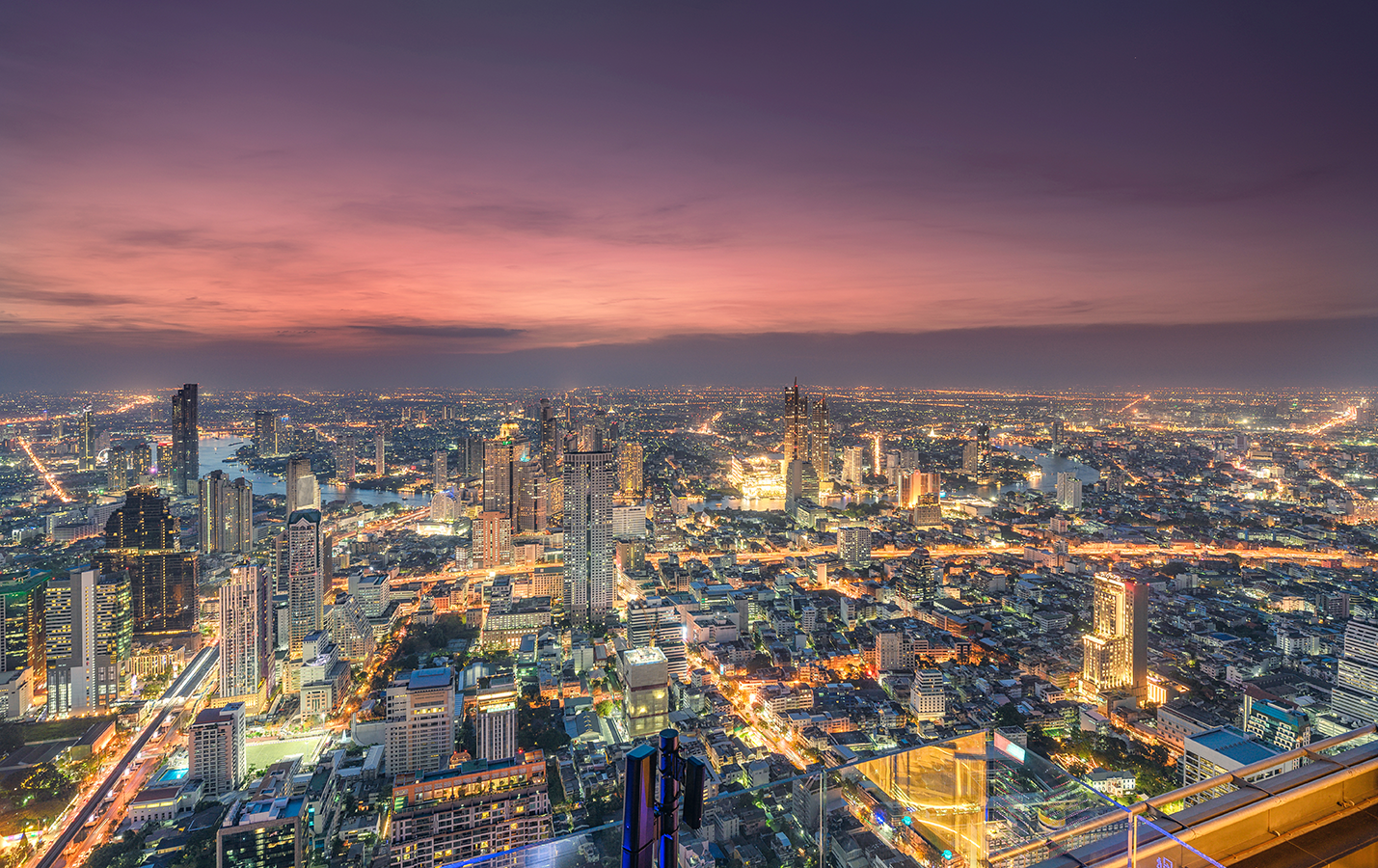
Bangkok’s skyline has evolved into a futuristic playground, with high-altitude experiences that offer a literal breath of fresh air above the city’s frantic streets. The undisputed crown jewel of this modern transformation is the Mahanakhon Skywalk, located atop Thailand’s tallest “pixelated” skyscraper. Here, adrenaline seekers can walk across one of the world’s largest glass trays suspended 310 meters in the air, or ascend to “The Peak” for an unobstructed 360-degree panorama of the capital. For the best experience, arrive around 5:00 PM to catch the sunset, and then head down to the Sky Beach bar—the highest in the city—to watch as the city transforms into a glittering sea of neon lights.
Beyond the Skywalk, Bangkok’s rooftop bar scene has become a global benchmark for luxury and design. While classics like Sky Bar at Lebua (made famous by The Hangover II) still draw crowds for their iconic golden domes, newer hotspots like Tichuca in Thonglor have stolen the spotlight with their massive, LED-lit “Tree of Light” that sways in the wind. For a more relaxed “urban garden” vibe, Above Eleven on Sukhumvit Soi 11 offers a unique Peruvian-Japanese menu with stunning views, while Octave Rooftop at the Marriott Sukhumvit provides a multi-level party atmosphere with zero glass barriers. Whether you’re sipping a signature cocktail at Bar.Yard or dancing at Pastel, these sky-high venues are the definitive way to experience the energy of modern Bangkok.
Day Trips from Bangkok
Best Hotels in Bangkok
Practical Information & Travel Tips
Staying Safe: Common Scams to Avoid
While Bangkok is generally a very safe city for travelers, the most common issues are minor “confidence scams” designed to separate you from your cash rather than cause physical harm. The most legendary is the “Grand Palace is Closed” scam, where a friendly, well-dressed local or a tuk-tuk driver will approach you near a major landmark and insist it is closed for a royal ceremony or a holiday. They will then offer to take you on a “special” tour of alternative temples for a suspiciously low price (often 20–40 Baht). This tour inevitably includes stops at high-pressure gem shops or tailor stores where the driver receives fuel vouchers or commissions for bringing you in. The best defense is to always walk to the entrance yourself to verify opening hours, as major temples like Wat Pho and the Grand Palace are almost never closed during the day.
Another prevalent trap involves unmetered taxis and exaggerated tuk-tuk fares in high-traffic tourist zones like Khao San Road and Sukhumvit. Some drivers may refuse to use the meter and instead quote a “flat rate” that is three to four times the actual price. To stay safe and save money in 2025, it is highly recommended to use ride-hailing apps like Grab or Bolt, which provide fixed pricing and GPS tracking. Additionally, be wary of “friendly strangers” who approach you with unsolicited travel advice or invitations to “government-sponsored” sales; while Thai hospitality is genuine, a cold approach in a heavy tourist area is often the start of a sales pitch. By keeping your wits about you and politely declining “too-good-to-be-true” offers, you can enjoy the city’s vibrant energy without any unwanted detours.
Temple Dress Code & Etiquette
Visiting Bangkok’s sacred temples is a highlight for most travelers, but it requires a high level of cultural mindfulness regarding your attire and behavior. The most important rule to remember for 2025 is to cover your shoulders and knees—this applies to all genders. While many neighborhood temples are somewhat relaxed, major sites like the Grand Palace and Wat Phra Kaew enforce a zero-tolerance policy; visitors in tank tops, short skirts, or ripped jeans will be denied entry or asked to buy a cover-up from nearby vendors. To stay comfortable in the tropical heat while remaining respectful, opt for loose-fitting, breathable fabrics like linen or cotton, and always carry a lightweight sarong or scarf in your bag for an instant “temple-ready” fix.
Beyond what you wear, your physical actions inside the temple grounds carry deep spiritual significance. Always remove your shoes, hat, and sunglasses before entering the main prayer hall, and take care to step over the wooden threshold rather than on it, as locals believe this is where the temple’s guardian spirits reside. Once inside, never point your feet toward a Buddha image or a monk, as feet are considered the “lowest” and least sacred part of the body; instead, sit with your legs tucked neatly to the side or behind you. It is also vital to maintain a quiet, meditative atmosphere—avoid loud conversations, keep your phone on silent, and never touch sacred artifacts or sit on Buddha statues for a photo. By following these simple gestures of respect, you’ll be welcomed warmly into the heart of Thai spiritual life.
Money, ATMs, and Currency Exchange
Managing your finances in Bangkok is a balance between embracing the city’s “cash is king” culture and navigating its modern digital transition. The most important thing to know for 2025 is that Thai ATMs charge a high flat fee of 220 Baht (approx. $6.50) for every withdrawal using a foreign card. To minimize these costs, it is best to withdraw the maximum amount allowed—usually 20,000 to 30,000 Baht—in a single transaction. Always remember to select “No Conversion” (decline the ATM’s exchange rate) so your home bank handles the currency conversion, which is almost always a better deal. While credit cards are widely accepted in malls, hotels, and upscale restaurants, you will still need plenty of cash for street food, local markets, and smaller shops.
If you prefer to exchange physical cash, skip the airport banks and hotel desks, where rates are notoriously poor. Instead, look for reputable exchange brands like SuperRich (the green or orange branches) or Vasu Exchange in the Sukhumvit area, which consistently offer the most competitive mid-market rates. You will need your original passport to exchange money legally in Thailand. For a more modern approach, many travelers now use travel-specific cards like Wise or Revolut, which allow you to spend with low fees; additionally, you can now tap your contactless Visa or Mastercard directly at MRT subway gates to pay for your fare, though the BTS Skytrain still generally requires a physical Rabbit Card or cash-purchased tickets.